

College Can Cost $100,000 to $370,000 Per Child.
Most Families Pay More Than They Have To.
The financial aid system has rules most families never learn, and colleges know them all. Find out what college will really cost your family before you apply, file a form, or sign a loan.
Free 60-minute consultation • No Obligation • In Person or Online
6-8%
Yearly increase in the total cost of college
5.8 Years
Average time to finish a "4-year" degree
$50K-$100K
Added cost when a student changes majors
Only 11%
Share of student aid from private scholarships
Does Any of This Sound Familiar?
⯁ We may be leaving money on the table without knowing it
Myth vs. Reality
"We'll Just Take Out Loans" Is Getting Harder
Not all loans are created equal, and the federal rules changed in July 2026.
$27,000
The most a dependent student can borrow in federal Direct Loans over four years. At many schools, that doesn't cover a single year.
9.07% + 4.2% Fee
The 2026–27 Parent PLUS loan rate, plus an upfront fee of about 4.2%. Parents are 100% responsible, and repayment starts within 60 days.
$65,000 Cap
For students starting after July 1, 2026, Parent PLUS borrowing is capped at $20,000 a year and $65,000 total per student. The rest has to come from somewhere.
Two Kids in College? There's No Longer a "Sibling Discount."
Under the old formula, a family's expected contribution was split between children in college at the same time. Under today's Student Aid Index (SAI), the full amount applies to each student. A $40,000 SAI used to mean $20,000 per child. Now it can mean $40,000 for each.
The Sticker Price Is Not What You Pay
Every family's financial aid comes down to one equation, and most families never run it before they apply.
COA
Cost of Attendance
SAI
Student Aid Index
Need
What you're eligible for
But schools don't meet need the same way. Some meet 100% of it. Others meet only 30–50%, and some fill the gap with loans instead of free money. That's how a private college can end up costing less than a state school.
Hypothetical illustration for educational purposes only.
What Colleges Don't Advertise
According to Money magazine, 65% of private schools and 27% of public schools practice "financial aid leveraging": working out the least aid it takes to get your student to enroll.
Award letters can mis-award, under-award, and be used to compete with other schools. The first offer isn't always the final offer, and knowing what you should receive is how you avoid overpaying.
Using the rules the way they were written is perfectly legal and ethical, just like a CPA uses the tax code to save you money.
Same Income. Same Assets. Different Results.
| Family A | Family B | |
|---|---|---|
| Family income | $80,000 | $80,000 |
| Assets (excl. home) | $60,000 | $60,000 |
| Home equity | $100,000 | $100,000 |
| Family size / in college | 4 / 1 | 4 / 1 |
| Contribution per year | $28,703 | $16,443 |
A difference of $12,260 a year, or more than $49,000 over four years, because Family B understood how the pieces fit together before applying.
Hypothetical illustration. Actual outcomes depend on each family's circumstances and current federal and institutional rules.
What College Really Costs Your Retirement
Every dollar you overpay for college is a dollar that isn't growing for your retirement. Here's what one child's college costs could grow to if invested instead:
Years Until Retirement | Public $120,000 | Private $200,000 | Elite $280,000 |
|---|---|---|---|
| 15 | $287,587 | $479,311 | $671,036 |
| 20 | $384,856 | $641,427 | $897,997 |
| 30 | $689,218 | $1,148,698 | $1,608,177 |
Hypothetical illustration assuming a 6% annual rate of return and one child's college expenses. Not a guarantee of future results.
The Biggest College Planning Mistakes
Not filing financial aid forms accurately and on time
Assuming you make too much money for financial aid
Only applying to schools you think you can afford
Not applying to a wide enough variety of schools
Not knowing your SAI, a school's cost, or how much need it meets
Not starting early enough
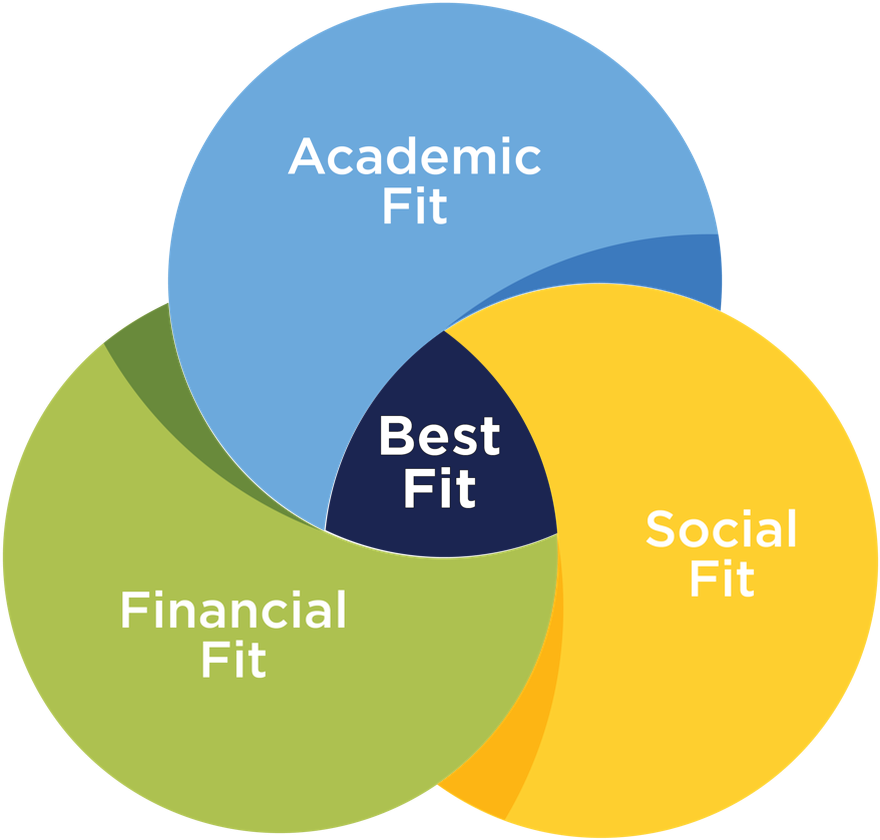
Our Goal: The Best-Fit School
The right college isn't just the one you can afford. It's where three things overlap.
Academic Fit
Programs and rigor where your student will thrive and finish on time.
Social Fit
A campus, size, and culture where your student feels at home.
Financial Fit
A school that meets your needs with free money, not a mountain of loans.
Most families only think about the first two until the award letters arrive. We help you plan for all three from the start.

Craig Hebert
Wealth AdvisorMeet Craig Hebert
If you're reading this today, you already know the feeling — pride, a little panic, and a hundred questions about how this is all going to work. Craig gets it. He's been in your seat.
The process is different than it was 20-30 years ago. A college dollar is now in constant competition with a retirement dollar, and roughly two out of every three college seniors graduate carrying student loan debt.
Craig's goal is that every student has the resources to find their best-fit school — academically, socially, and financially — without families losing sight of their own future in the process. As the college planning landscape keeps shifting, staying informed is the only way to stay in control of it, rather than letting sticker shock make the decisions for you.
His approach is about balance: lowering the cost of education and taxes while increasing cash flow and what you're able to set aside for retirement. When those pieces line up, you end up with more money, more time, and more peace of mind.
Craig is a proud dad of two Liberty High School graduates, and he spent years yelling (loudly) from the sidelines of their baseball, football, wrestling, and track seasons. His oldest is now at Penn Tech in Williamsport, PA, and his youngest is at Misericordia University in Dallas, PA. He's walked this road as a parent, not just as an advisor — which is exactly why he takes it so personally when he sits down with a family. When he's not talking college planning, he's car camping, pretending he knows how to golf, or sitting around a campfire with friends.
Craig is a second-generation financial advisor. He joined his father, Frank Hebert, CPA, at Summit Financial Services in 2001, and for 25 years his focus has been education funding and retirement income planning. He uses the latest tax and educational laws to help families drive down the cost of college while keeping their own retirement on track.
He's also given his time to causes close to home: By Their Side, supporting developmentally disabled and intellectually challenged adults and their families through the transitions of caregiving; the Good Scouting Program, raising awareness and funding for Boy Scouts in the Baltimore Area Council; and the South Carroll Business Association, raising scholarship funds for local students pursuing degrees in business and finance.
Craig was helping families plan for college long before he had kids of his own. He's adamant about one thing: the process looks nothing like it did when he went to UMBC in the mid-90s — and neither should your plan.
What You'll Get in Your Free College Planning Assessment
A private, 60-minute session focused on your family. No generic advice, no obligation.
If you're married, please plan for both parents to attend so everyone is on the same page.
"A fool with a plan is better than a genius with none."
Every year you wait, college costs more and you have fewer options. Find out where you stand before the next deadline, not after.
The information on this page is general in nature and based on current laws and regulations, which change often. All examples are hypothetical and for illustration only; they do not represent any specific client's results. Loan rates and limits shown are for federal loans first disbursed on or after July 1, 2026, and are subject to change.